


On November 21, 2025, an international online conference took place “Small Farmers of Ukraine and the EU: Commonalities and Differences in the New Reality,” which was joined by over 60 participants. Scientists from the Department of Economics and Policy of Agrarian Transformations at the Institute of Economics and Forecasting of the NAS of Ukraine organized this event together with colleagues from the Swedish University of Agricultural Sciences (SLU), the Institute of Rural and Regional Research in Norway (RURALIS), and the Ukrainian-Polish project “Substantiation and measures for implementation of a human rights-based integrated approach to rural development, food security and land policy in post-war rebuilding of Ukraine,” which is funded under the “Long-term program of support of the Ukrainian research teams at the Polish Academy of Sciences carried out in collaboration with the U.S. National Academy of Sciences with the financial support of external partners” and is implemented at the Institute of Rural and Agricultural Development of the Polish Academy of Sciences (IRWiR PAN) in Warsaw (Poland).
The conference became a professional discussion platform where Ukrainian and European farmers, scientists, and civil society representatives exchanged experiences and opinions and identified priorities for Ukraine’s European integration in the context of post-war recovery of its agricultural sector. Special attention was paid to analyzing the key problems faced by European family-type farmers and ways to solve these problems within the framework of the EU Common Agricultural Policy. Presentations were made by scientists, experts, and practitioners from Ukraine, Poland, Sweden, Spain, Italy, and Romania.

The moderator of the event – head of the Department of Economics and Policy of Agrarian Transformations at the Institute of Economics and Forecasting of the NAS of Ukraine, academician of the NAS of Ukraine Olena Borodina welcomed the conference participants and expressed sincere gratitude to Ukrainian farmers: Viktor Sheremeta, Mykola Stryzhak, Viktor Honcharenko, Oleh Bondarenko, Oleh Hannenko, Yurii Shapkin, Eduard Shulzha, Maryna Sheremeta, Ivan Tomych, Anatolii Boiko, Taras Voitovych, Mykola Boichenko, Vyacheslav Rashchupkin, Hryhorii Dubyna, Hryhorii Sheliazia, Vasyl Radkevych, Yurii Rozovyk, Mykola Lyashchuk, Oleksii Loburts, Oleksandr Dmytruk, as well as Liudmyla Shevchenko and Valerii Burov, who, despite the difficulties during the recent war years, actively cooperated with representatives of academic science and the farming community, participated in sociological studies of food security processes for Ukrainians during the war, farmers’ access to production and financial markets, changes regarding land access, and more.
Passing the floor to the researcher from Sweden, Brajan Kuns, Olena Borodina noted that the conference was organized with the support of the Swedish University of Agricultural Sciences and thanked Mr. Kuns for his personal contribution to establishing cooperation with Ukrainian agricultural economists.
Senior Lecturer at the Department of Urban and Rural Development at the Swedish University of Agricultural Sciences, Doctor of Philosophy Brajan Kuns works directly with farmers and strives to better understand their problems through direct dialogue. This aspect, as the scholar emphasized, should not be underestimated. The speaker thanked the attendees for participating, especially given the difficult conditions caused by Russian aggression, and noted the resilience of Ukrainian farmers, scientists, and research institutions. He also highlighted the importance of international solidarity and cooperation between European and Ukrainian farmers and scientists, emphasizing the value of joint projects and future offline meetings. Brajan Kuns specifically noted the cooperation within the project funded by the Swedish Research Council involving the Institute of Economics and Forecasting of the NAS of Ukraine.
 Senior Lecturer at the Department of Urban and Rural Development at the Swedish University of Agricultural Sciences, Doctor of Philosophy Brajan Kuns works directly with farmers and strives to better understand their problems through direct dialogue. This aspect, as the scholar emphasized, should not be underestimated. The speaker thanked the attendees for participating, especially given the difficult conditions caused by Russian aggression, and noted the resilience of Ukrainian farmers, scientists, and research institutions. He also highlighted the importance of international solidarity and cooperation between European and Ukrainian farmers and scientists, emphasizing the value of joint projects and future offline meetings. Brajan Kuns specifically noted the cooperation within the project funded by the Swedish Research Council involving the Institute of Economics and Forecasting of the NAS of Ukraine.

The experience of the family farm “Olimp Agro” (Verkhnodniprovskyi district, Dnipropetrovsk region) was shared by its co-owner Liudmyla Shevchenko. She briefly outlined the development path of the farm, which grows main field crops – from starting with 14 hectares to expanding to about 300 hectares of land and full technical equipment on the eve of the full-scale invasion.
According to Ms. Liudmyla, after February 2022, Ukrainian farmers faced a sharp drop in purchase prices, inability to sell products, and significant increase in resource costs, which forced them to economize as much as possible and change the crop structure. Despite difficult conditions, “Olimp Agro” continues to operate – thanks to its own flexibility, supplier trade credits, and rare cases of bank lending, which remains inaccessible for most small farmers. Liudmyla Shevchenko also reminded about state support programs and programs from foreign partners. However, in reality, these programs turn out to be inaccessible for small farmers.
Liudmyla Shevchenko drew attention to current war challenges: labor shortages, restrictions on the use of machinery, elevator overload, logistics problems, and constant risks of drone debris and fires. All this, along with the general increase in production costs, price drops, climate change, and depletion of water resources, puts small farms on the brink of survival. In Liudmyla Shevchenko’s opinion, small farmers remain the backbone of the country but need fairer state policies, accessible financing, and conditions that would allow development based on European models. Concluding her speech, the speaker emphasized that the most important condition for agricultural recovery is peace in Ukraine.

The head of the farm “Sodzhus” (Znamianka district, Kirovohrad region) Mykola Stryzhak emphasized in his speech that the Ukrainian peasant remains resilient despite all challenges. After every war, the revival of the state began from the village, and today farmers again face several challenges.
The first challenge is external aggression destroying the economy and infrastructure. The second is internal difficulties related to state decisions that often do not promote the development of small and medium farms. Many legislative initiatives, according to the speaker, create advantages for large agricultural companies, while family farms remain without access to financing and real support. Mykola Stryzhak noted that the formation of state agricultural policy in Ukraine is influenced by large agroholdings, so decisions rarely consider the needs of small producers. Even quality laws, he said, do not work due to underfunding or imperfect subordinate acts.
The speaker highlighted the problem of mobilization and reservation of workers: the main personnel losses are borne by small farms, while large companies often have more opportunities to protect their staff.
Based on his experience communicating with European farmers, Mykola Stryzhak noted that European partners are ready to cooperate specifically with Ukrainian family farms, whereas the agroholding model causes them concern. The speaker proposed building direct partnerships between Ukrainian and European farmers. He also recalled that in 2017–2020, when the state created proper conditions, the number of farms increased significantly. This demonstrates the effectiveness of policies focused on family farming development.
In conclusion, the speaker emphasized: Ukrainian farmers, who today are massively defending their country on the front line, expect clear prospects in the post-war period and fair treatment. He called for uniting efforts, strengthening interaction with European partners, and defending the development of small and medium farming as the foundation of a democratic society and the country’s economic resilience.
The head of the nursery “Migdalevi Sady” (Oleksandriia district, Kirovohrad region) Valerii Burov spoke about his unique experience in growing almonds, which he began acquiring in 2016 in Kherson region. The first tests of old Ukrainian, Crimean, and Moldovan almond varieties showed their low resistance to spring frosts, prompting the farmer to turn to European, primarily Spanish, varieties. Spanish breeding attracted attention due to self-fertility and significantly later flowering times, which help minimize the risk of orchard damage from unpredictable cold spells.
In 2019, a nursery was established in Kherson region where comparative studies of different varieties were conducted. In 2022, due to occupation and hostilities, the farm was completely destroyed, and the farmer had to evacuate his family and restart work in Svitlovodsk, where he created a new nursery from scratch and continued research.
Valerii Burov drew attention to the low share of almonds among Ukrainian nut crops and the growing domestic consumption, much of which is covered by imports. He emphasized that developing local plantations can ensure import substitution and create a new high-margin industry.
In this direction, in November 2022, a licensing agreement was signed between the National Research Council of Spain (CSIC) and the Ukrainian Nut Association regarding the dissemination of modern Spanish almond varieties in Ukraine. In 2023, two leading Spanish varieties – ‘Penta’ and ‘Makako’ – were included in the State Register of Plant Varieties of Ukraine. Currently, cooperation continues with the research center CEBAS-CSIC (Center for Edaphology and Applied Biology of Segura), particularly regarding the identification of territories suitable for establishing almond orchards. Valerii Burov thanked Spanish partners and colleagues for their support, for the opportunity to learn about almond growing experience in Spain, and for their participation in the first international conference of Ukrainian almond growers held this year in Svitlovodsk.
The key research results of the CEBAS-CSIC center, which cooperates with the Ukrainian Nut Producers Association on the development of almond varieties ‘Penta’ and ‘Makako’ in Ukraine, were presented by senior research fellow of the center, Doctor of Philosophy Jose Alberto Egea Larrosa. The research group he belongs to works in the Spanish region of Murcia – studying various almond varieties, including ‘Penta’, ‘Makako’, and ‘Alaska’, characterized by late or very late flowering. Some varieties (e.g., ‘Alaska’) have limitations for Ukrainian conditions due to low frost resistance. Long-term daily temperature series from 178 meteorological stations in Ukraine for 1946–2020 are used for analysis. Results indicate an increase in average winter temperatures. This creates new opportunities for almond cultivation. For example, rising winter temperatures provide the necessary range from 0° to +12°C, which promotes chilling accumulation important for late-flowering varieties.
Spanish scientists modeled various scenarios for adapting almonds to Ukrainian conditions, considering frost risks during critical periods (before and after flowering). Areas were identified where cultivation is impractical due to minimum temperatures and frequency of severe frosts. Conversely, several regions showed high suitability for growing ‘Penta’ and ‘Makako’ varieties.
The model takes into account several uncertainties – the date of chilling accumulation start, the effect of negative temperatures, differences between Spanish and Ukrainian conditions, as well as potential changes related to global warming. The author emphasized that the approach is conservative and based on historical data. At the same time, northern regions may prove promising. This requires further field research.
In conclusion, Jose Alberto Egea Larrosa thanked the conference organizers and expressed readiness to continue cooperation within joint projects.
The president of the Romanian small farms association “ECO RURALIS,” which unites about 20,000 small farmers in Romania, Ramona Dominichu (head of a family farm in Vâlcea County, Romania) thanked the event organizers and supported Ukrainian farmers who are currently working in the fields and defending their country on the front line. She shared the Romanian experience of implementing the EU Common Agricultural Policy (CAP) from the perspective of small farms. As the speaker emphasized, Romania joined the EU in peacetime, whereas Ukraine is integrating under wartime conditions, which requires a particularly fair and inclusive approach.
Ramona Dominichu characterized the current imbalances of the CAP, including land concentration, unequal access to financing, bureaucratic barriers, and insufficient support for small farmers, which in Romania led to the disappearance of a significant portion of small farms. The speaker stressed the need to adapt European policy to national contexts, support cooperation, ecological practices, and short supply chains, as well as the importance of limiting subsidies to large agroholdings. She urged Ukraine not to repeat Romanian mistakes, ensure fair distribution of support, and protect against land speculation during post-war recovery. Ramona Dominichu emphasized the courage of Ukrainian farmers and the importance of their role for food security, democracy, and national sovereignty, highlighting the necessity of solidarity among EU farmers and support for Ukraine’s European integration.
The experience of her farm was presented by a farmer and consultant from Poland, co-owner of a private farm in Zwoleń County (Masovian Voivodeship) Małgorzata Kacperczyk-Kopcińska. On 250 hectares in the central part of the country, her family grows cereals, sunflower, wheat, corn, fruit plantations, and breeds fish, applying ecological schemes and integrated pest management. Expressing support for Ukrainian farmers, the speaker emphasized the significant polarization of opinions in Poland regarding the war and trade with Ukraine. She noted that despite criticism, some Polish farmers continue to help Ukrainian colleagues in many ways – from buying grain to providing generators. At the same time, Małgorzata Kacperczyk-Kopcińska explained that most Polish farms with 5 to 10 hectares of land view agriculture as an additional activity rather than the main source of income, which significantly affects their position and market perception. In her opinion, the key difference between such farms and those providing the main family income lies in the level of involvement and responsibility.
Małgorzata Kacperczyk-Kopcińska focused in detail on the challenges of Poland’s agricultural policy: excessive bureaucracy, complex legislation, lack of consultants for small farmers, and a large volume of documentation, identical for farms of any size. Some farmers refuse to participate in eco-schemes due to reporting requirements, although her farm has been implementing integrated pest management for many years. The speaker also highlighted serious climate risks – prolonged drought, lack of snow in winter, water shortages in lakes, affecting both crop and fish production. She emphasized that due to varying moisture conditions, yields within her farm can differ by twofold.
Separately, the speaker stressed the importance of dialogue between farmers of Eastern and Western Europe, participation of national associations in European processes, and the need for their support by governments. In Poland, only a few active farmers’ associations exist, and their voice at the EU level is insufficient if associations do not act jointly and consistently.
Concluding her speech, Małgorzata Kacperczyk-Kopcińska expressed confidence that with active participation of farmers’ organizations and proper state support, Ukraine’s EU membership could be very beneficial for Ukrainian peasants.
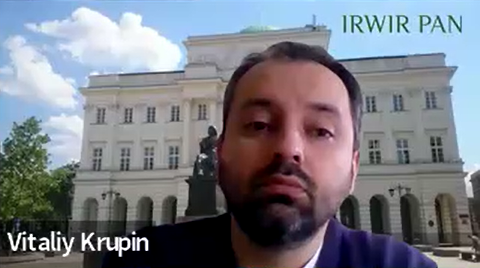
The experience of Poland and other Central and Eastern European countries shows that EU accession not only provided them with financial support but also created prerequisites for institutional changes, noted participant of the project “Rebuild Rural Ukraine” (rUAr), research fellow at the Institute of Rural and Agricultural Development of the Polish Academy of Sciences (IRWiR PAN), Doctor of Philosophy Vitalii Krupin. The scientist emphasized that in Polish public discourse, farmers’ concerns about Ukraine’s economic integration are growing: in particular, fears about the increased presence of the Ukrainian agricultural sector in EU markets and possible redistribution of the Common Agricultural Policy budget if Ukraine joins the EU are being voiced. At the same time, the speaker noted that these processes are already happening regardless of Ukraine’s EU membership, and open dialogue between farmers of the two countries will help find common solutions.
According to Vitalii Krupin, Ukrainian small farmers view potential EU membership not as a source of additional payments but primarily as an opportunity to obtain predictable and protected institutional working conditions – including counteracting raiding, excessive inspections, and other forms of pressure. He stressed that equal and fair rules of the game are more important than financial support, and the key demand of the Ukrainian agricultural sector is precisely a stable institutional environment.
Vitalii Krupin presented research results carried out within the “Rebuild Rural Ukraine” project involving the Institute of Rural and Agricultural Development of the Polish Academy of Sciences, the Institute of Economics and Forecasting of the NAS of Ukraine, and the Institute of Land Use of the National Academy of Agrarian Sciences of Ukraine (NAAS). The research covers issues of food security, land market, restoration of degraded and destroyed territories, and other areas.
Special attention was paid by the scientist to the structure of the Polish agricultural sector, which includes about 1.3 million farms, mostly with land areas up to 5 hectares. Small farms are widespread in the eastern and southern regions of the country, mainly use family labor, and have limited modernization opportunities. The situation is complicated by social tensions and the outflow of Ukrainian workers, leading to labor shortages for seasonal work.
Among the key challenges for small Polish farms, he named low profitability, rising resource costs, limited access to credit, aging farmers, and low trust levels that hinder cooperation. Despite EU financial support, many farmers avoid participating in eco-schemes due to bureaucratic difficulties and the risk of sanctions for non-compliance.
Summarizing, Vitalii Krupin noted that the EU Common Agricultural Policy has both advantages and disadvantages but generally ensures the development of small farming. He emphasized that adapting its instruments in Ukraine could become a significant impetus for development and strengthening the rights and opportunities of rural populations.

Stories of colleagues from Ukraine who lose entire harvests due to fires after drone and missile strikes on their fields by Russian forces deeply impressed the farmer from Sweden, owner of the farm “Berezove Selo” Fredrik Kölreyer. He emphasized that the challenges facing his farm are incomparable to those faced by Ukrainian agricultural producers and thanked for the opportunity to join the discussion and for the openness of conference participants, as the discussions are extremely valuable and inspiring.
On Fredrik Kölreyer’s own farm – there are 60 dairy cows, so by modern Swedish classification it belongs to small farms (less than 75 heads). The farm covers 100 hectares of land, mostly pastures and areas for fodder crops – barley, rye, wheat; rapeseed and almonds are not grown there. Some land cannot be used as arable, so cows and sheep are grazed there. Under such conditions, as the speaker emphasized, the best way to preserve biological capital is careful land stewardship and maintaining a sustainable production scale. The farm is now managed by the third generation of their family.
Showing statistics on the development of dairy farms in Sweden over the last 50 years, Fredrik Kölreyer, as the head of an organic dairy farm, spoke about radical changes: if earlier farms mostly kept 15–30 cows, now even the average size of his own herd (60 cows) is rare for Sweden, as farms are enlarging and the number of animals per farmer is increasing. Moreover, in Sweden, as in Poland, intensification and specialization of production remain subjects of ongoing debate. Despite this, Fredrik Kölreyer is confident about the importance of preserving small farming and the existence of farms of different sizes, as this reflects societal diversity and supports local communities’ life.
Referring to Ramona Dominichu’s words, Fredrik Kölreyer agreed on the importance of establishing cooperation locally, supporting diversity of farming models, and expressed understanding of the challenges faced by Polish farmers.

The experience of a family organic farm in Central Italy – the multifunctional family farm “Fattoria Cupidi” (Galleze, Lazio region, Viterbo province, Italy) – which has existed for five generations and combines poultry farming, organic egg production, forage crop cultivation, vineyards, olives, and nuts, was shared by Claudia Cupidi.
The farm includes owned and leased land, has about 9,000 poultry heads, its own feed production, a quality control laboratory, and uses solar panels and biomass for energy supply. A separate direction of the farm’s work is educational activities: practical classes and demonstrations of production processes for children and students, which is also part of its marketing strategy. Claudia Cupidi emphasized the social orientation of the farm, in particular, she spoke about a program involving people with special needs, which the farm supports as an element of social responsibility.
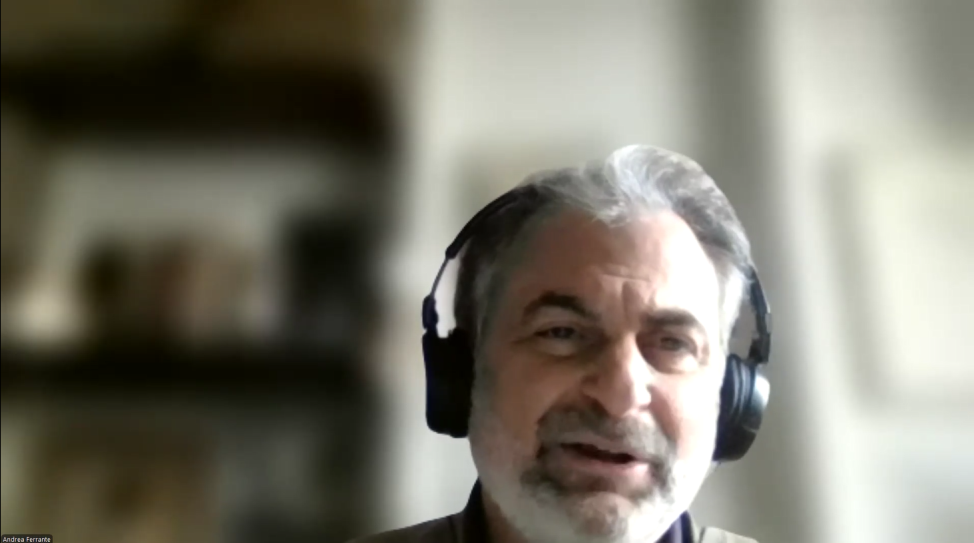
The head of the International School of Agroecology “Agroecology School” (Italy) Andrea Ferrante emphasized that although the world today is extremely complex and divided, the needs of small farmers and the challenges they face remain common to all. That is why, in his opinion, small farms must unite to effectively influence state policy, which still often supports large players and creates unequal conditions for small and medium farmers. He stressed that farmers are the center of society: together with scientists and educators, they take care of land preservation, communities, and the production of healthy products. Therefore, farmers need protection, strengthening of their knowledge and capacity, as modern technologies and digitalization often work against small farms. He believes that small and medium farms bring people back to the land, care for the soil, and create natural nutritious products necessary for a healthy future.
The scientist warned that society is already capable of producing food even without farmers. This shifts the political choice into an extremely acute area: will there be a place for farmers in the future food system? According to Andrea Ferrante, without farmers, guarantees of democracy and the right to quality food are impossible. Large farms displace small producers, so a fair agricultural policy is needed that supports small and medium farms as the foundation of food security. He noted that in Ukraine, which is experiencing the hardest times of war, farmers are capable of feeding 40 million people, restoring communities, preserving land, and building a sustainable food system. For this, equal market access rules, effective safety standards, support for local supply chains, and political recognition of farmers’ important role are necessary. Andrea Ferrante is convinced that only by rethinking incomes, markets, relations with communities, and creating policies that place small and medium farms at the center of the food system can a sustainable, multifaceted, democratic food system be formed that can ensure the future.

The president of the Association of Farmers and Private Landowners of Ukraine Viktor Honcharenko thanked the organizers and all conference participants, emphasizing that despite the difficulties faced by farmers in various European countries, the main challenge for Ukraine is the war, which daily takes the lives of farmers and other peaceful residents, including children. Under such conditions, according to him, the priority for farmers becomes not development but the survival of the state and food security so that people do not starve under shelling.
Viktor Honcharenko drew attention to the fact that farmers work under extremely difficult conditions of labor shortages – many machine operators and tractor drivers are now at the front. In addition, there is an acute shortage of affordable loans, as loans are issued at extremely high interest rates, which practically makes business development impossible. He noted that the greatest pressure on small farmers is created not so much by state bodies as by large agroholdings that influence the formation of legislation working against small farms.
As the speaker emphasized, the Association of Farmers and Private Landowners of Ukraine represents the smallest producers closely connected with rural communities. But today, in national legislation, the difference between small and large producers is disappearing, which opens up opportunities for manipulation. He also called on European Union farmers not to perceive Ukrainian farmers as competitors or enemies and stressed that the grain crises of past years were initiated not by farmers but by large trading companies.
In his address, Viktor Honcharenko called for understanding and solidarity, emphasizing that Ukrainian and European farmers work for a common cause and must be partners, and also expressed gratitude to European colleagues for support, understanding, and ongoing dialogue, emphasizing faith in joint victory, restoration of peace, and further strengthening of cooperation between Ukraine and the European Union.
At the end of the conference, academician of the NAS of Ukraine Olena Borodina thanked all participants for fruitful cooperation, support, and sincere solidarity that partners from different countries consistently demonstrate during this extremely difficult time for Ukraine, as well as for their readiness for dialogue and mutual support. She emphasized that united efforts of scientists, farmers’ organizations, and international institutions are critically important for protecting food security, supporting small producers, and restoring rural areas. Finally, Olena Borodina expressed hope for further deepening cooperation, joint research, and strengthening partnerships that will contribute to sustainable agricultural and rural development in Ukraine and Europe.
According to information from the Institute of Economics and Forecasting of the NAS of Ukraine