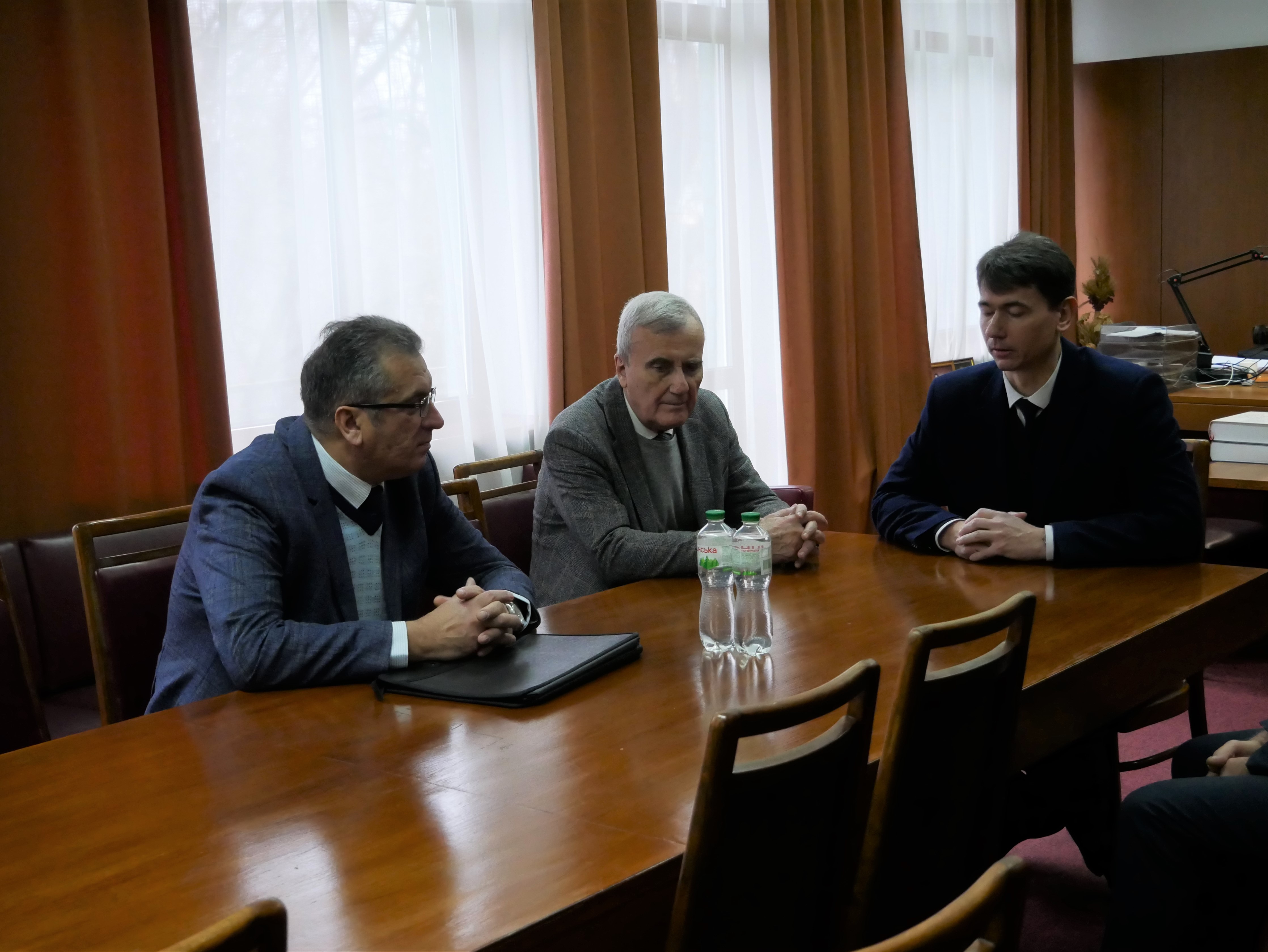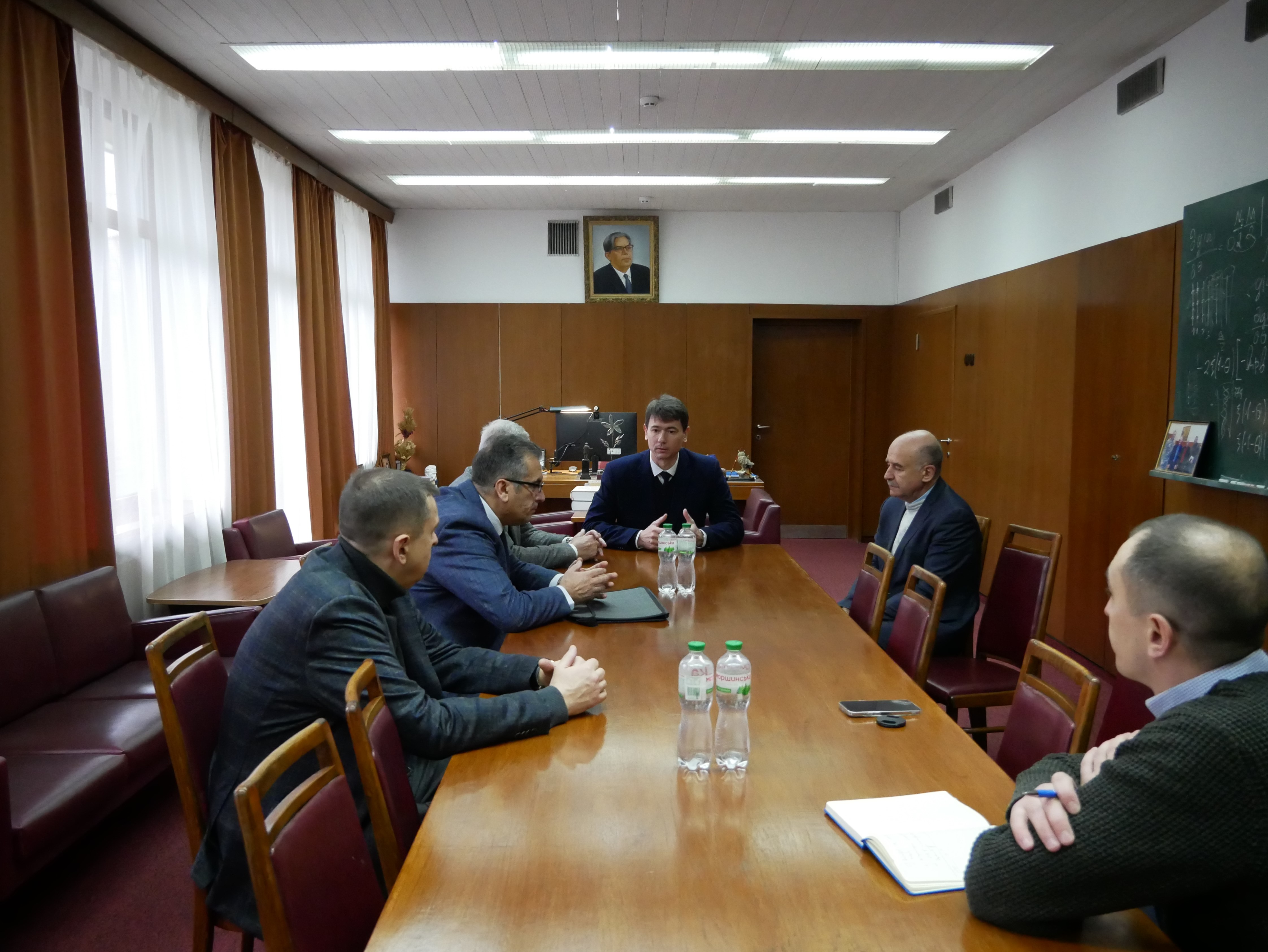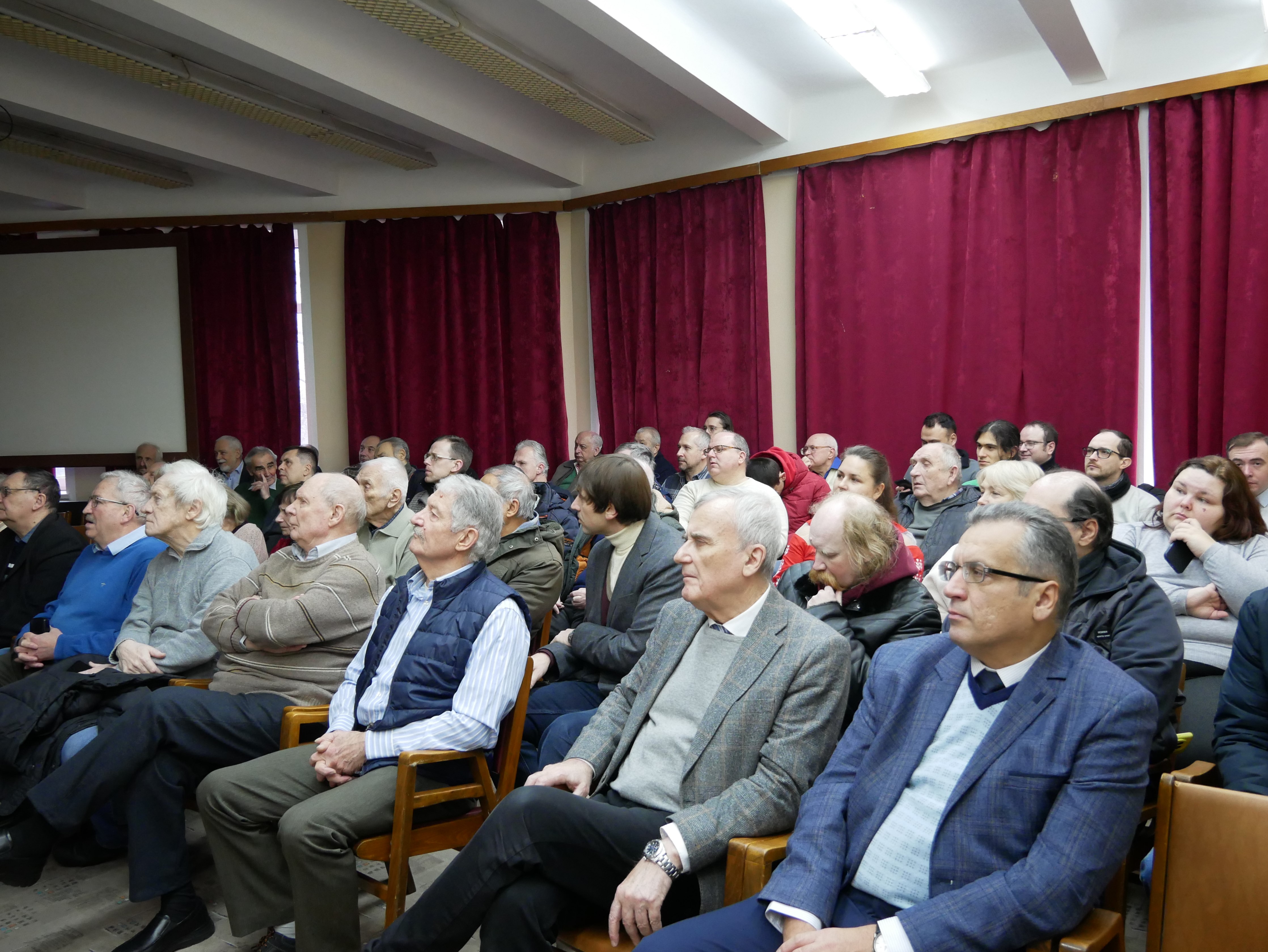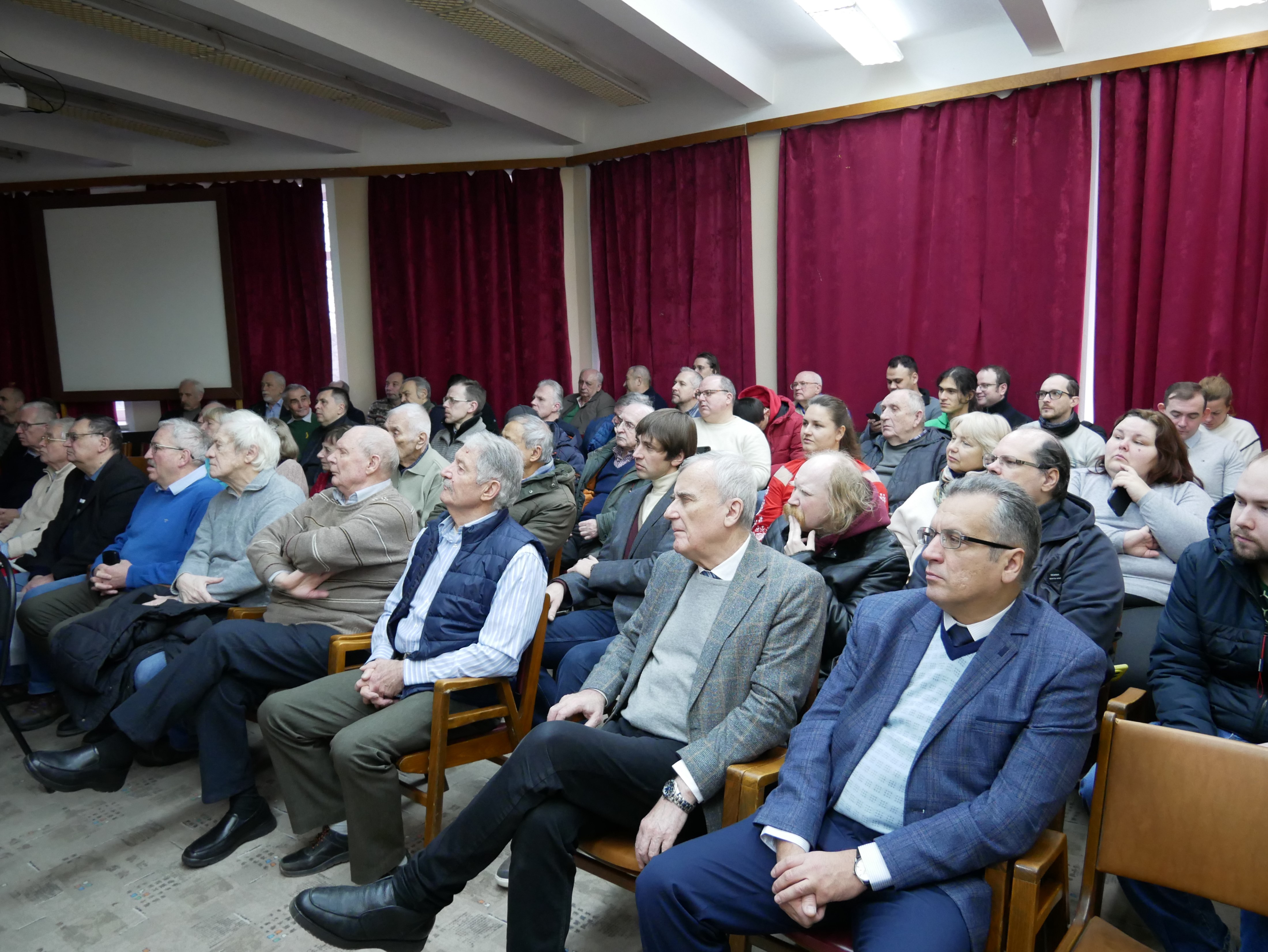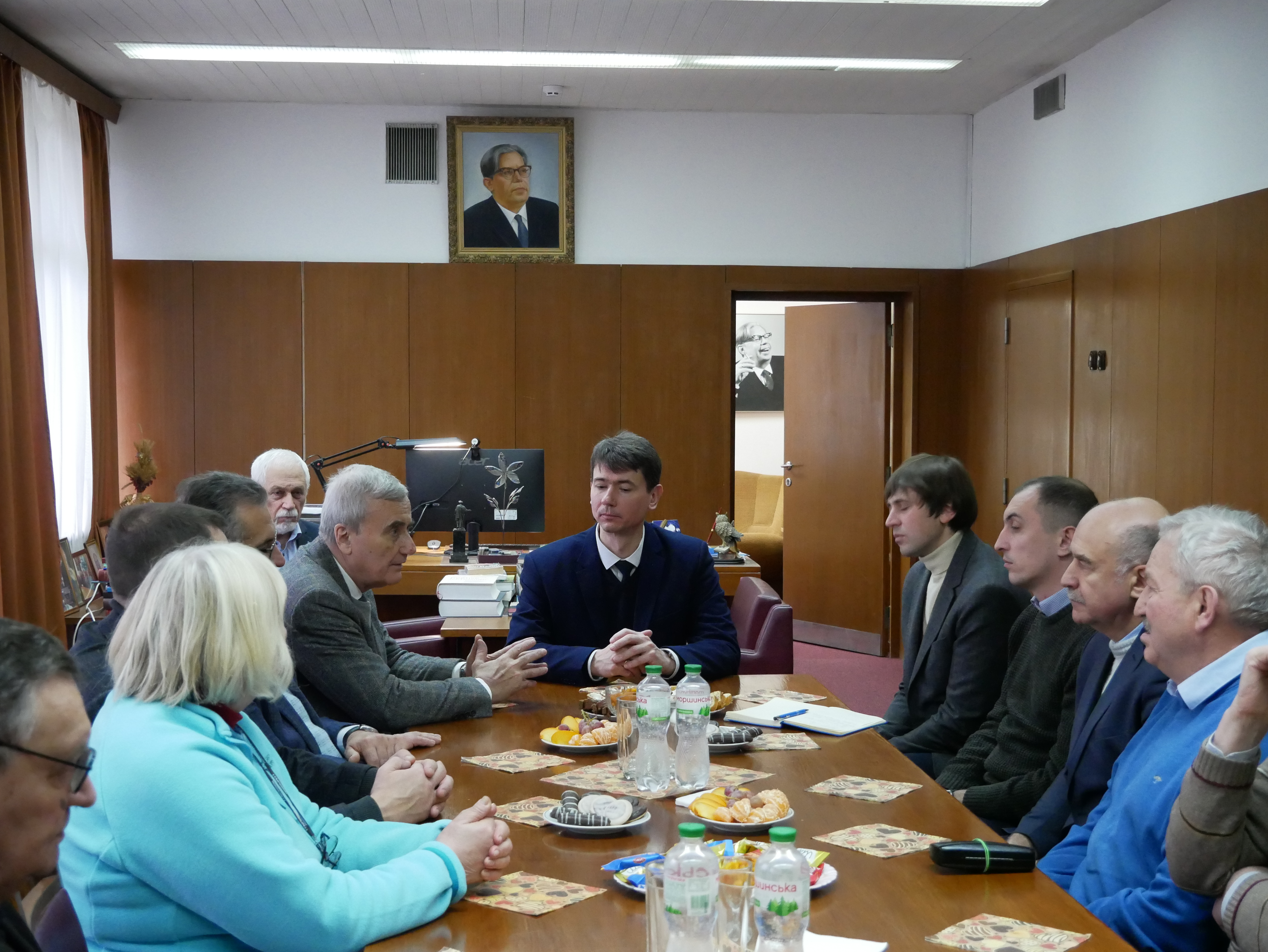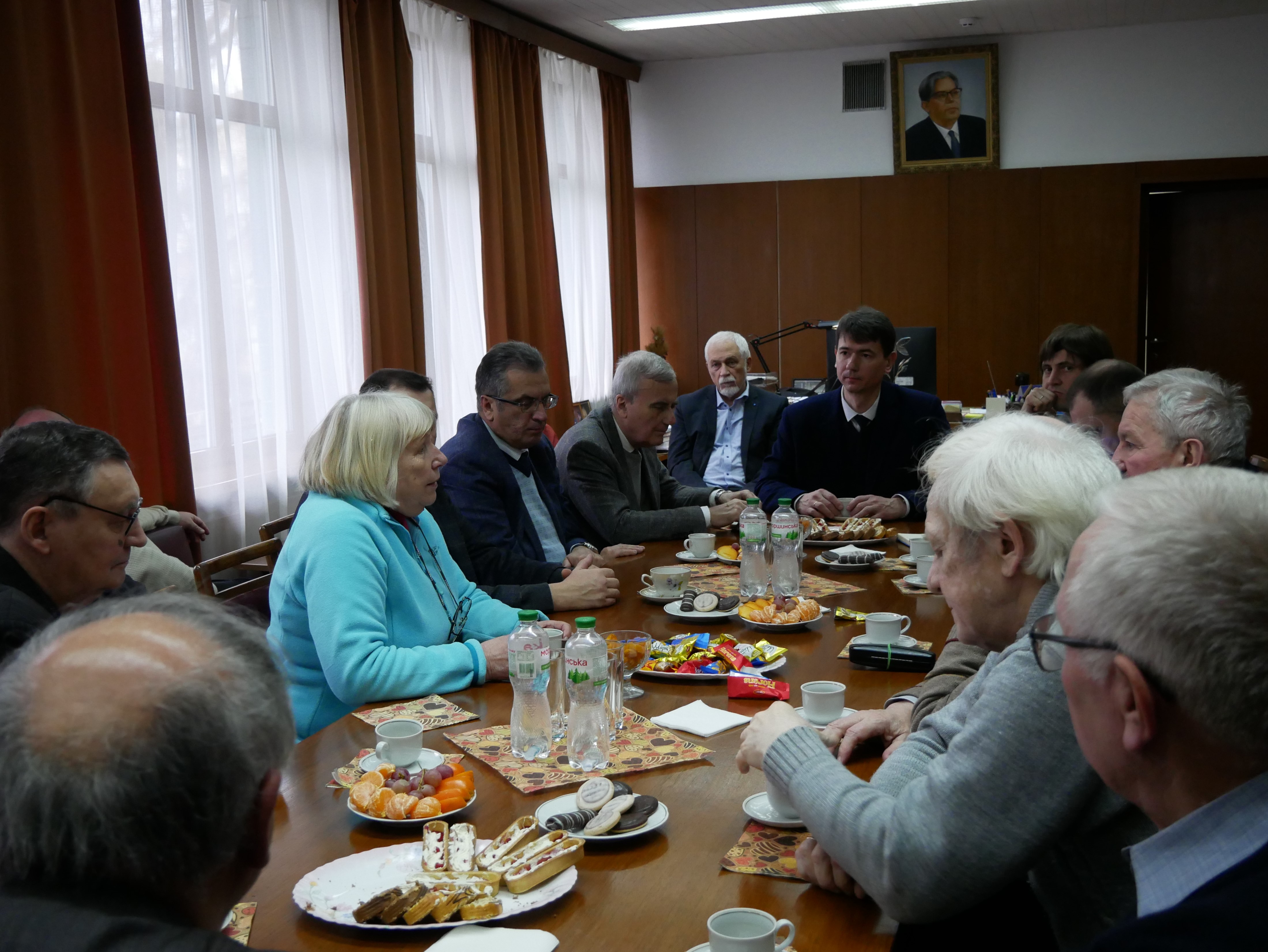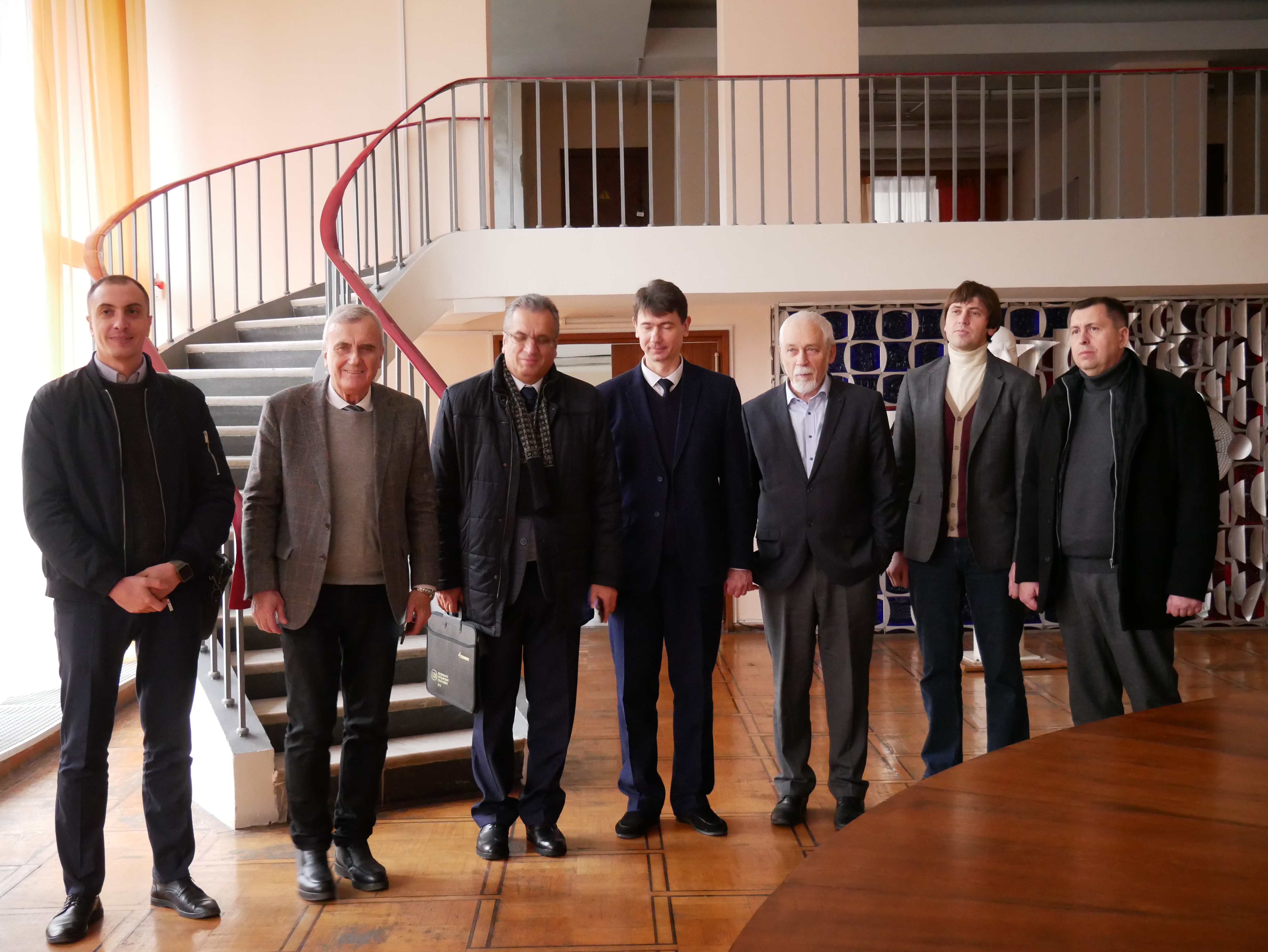
On December 16, 2025, the M.M. Bogolyubov Institute for Theoretical Physics of the National Academy of Sciences of Ukraine was visited by a delegation of the National Academy of Sciences of Ukraine, led by the First Vice-President of the NAS of Ukraine, Chairman of the Section of Physical-Technical and Mathematical Sciences, Academician Vyacheslav Bohdanov, and the Academic Secretary of the Department of Physics and Astronomy of the NAS of Ukraine, Academician Mykhailo Bondar, Scientific Secretary of the Section of Physical-Technical and Mathematical Sciences, Doctor of Technical Sciences Serhiy Bespalov, Scientific Secretary of the Department of Physics and Astronomy of the NAS of Ukraine, Candidate of Physical and Mathematical Sciences Volodymyr Hladkovskyi, and Senior Researcher of the Sector of Integrated Planning of the Scientific and Organizational Department of the NAS Presidium of Ukraine, Candidate of Political Sciences Tetiana Kuzmenko.
The purpose of the visit was to directly familiarize themselves with the scientific activities of the Institute, its personnel and infrastructure potential, as well as to discuss current tasks and strategic prospects for the development of theoretical physics within the academic science system under modern challenges.
The guests were welcomed by the Director of the Institute, Doctor of Physical and Mathematical Sciences Serhiy Perepelytsia, Honorary Director of the Institute, President of the NAS of Ukraine, Academician Anatoliy Zahorodnii, Deputy Director for Scientific Work, Doctor of Physical and Mathematical Sciences Volodymyr Zasenko, and the Scientific Secretary of the Institute, Candidate of Physical and Mathematical Sciences Ivan Starodub. The introduction to the institution began with a brief overview of the Institute, outlining its place within the structure of the NAS of Ukraine and its role as one of the leading centers of fundamental research.
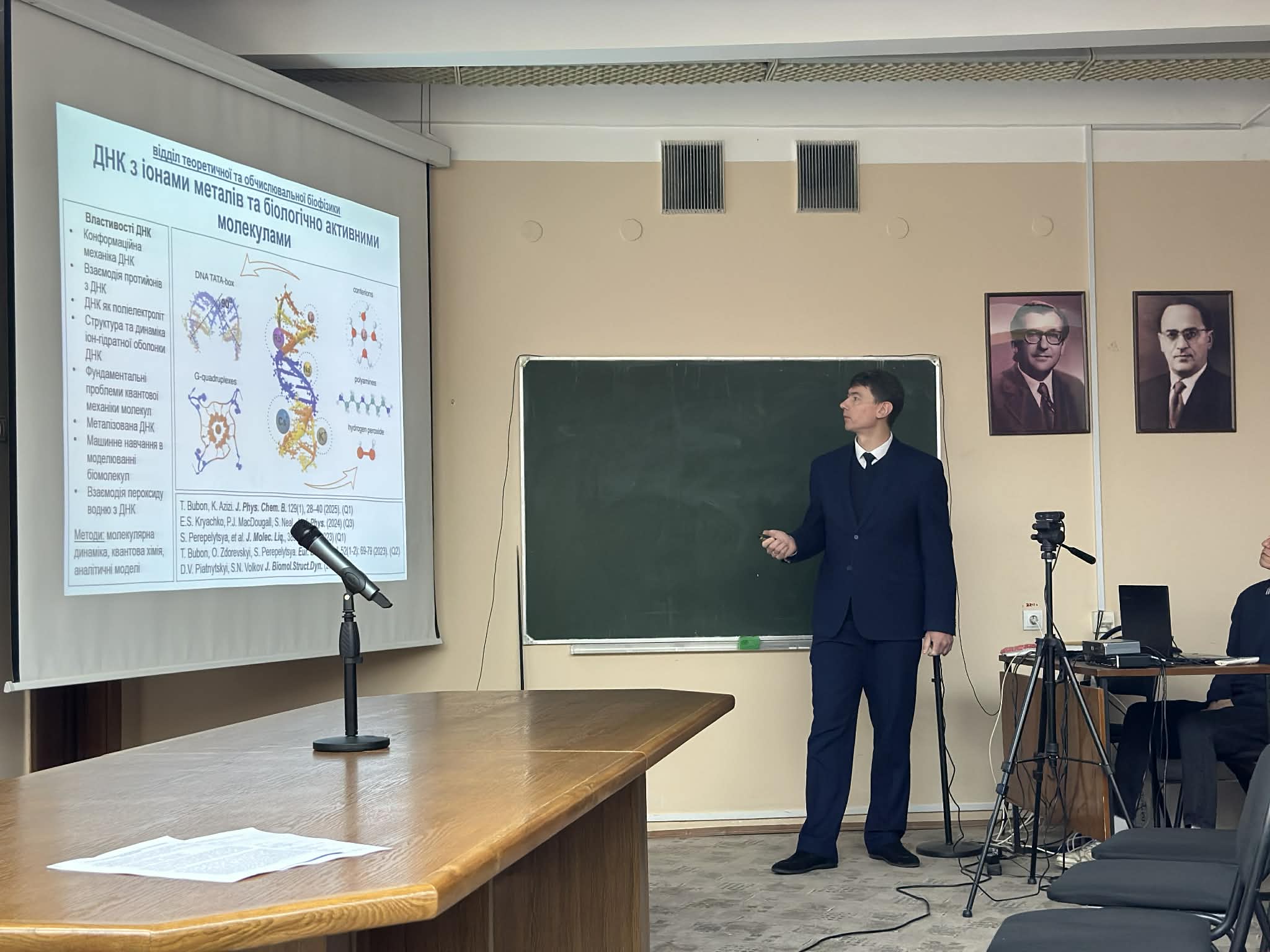
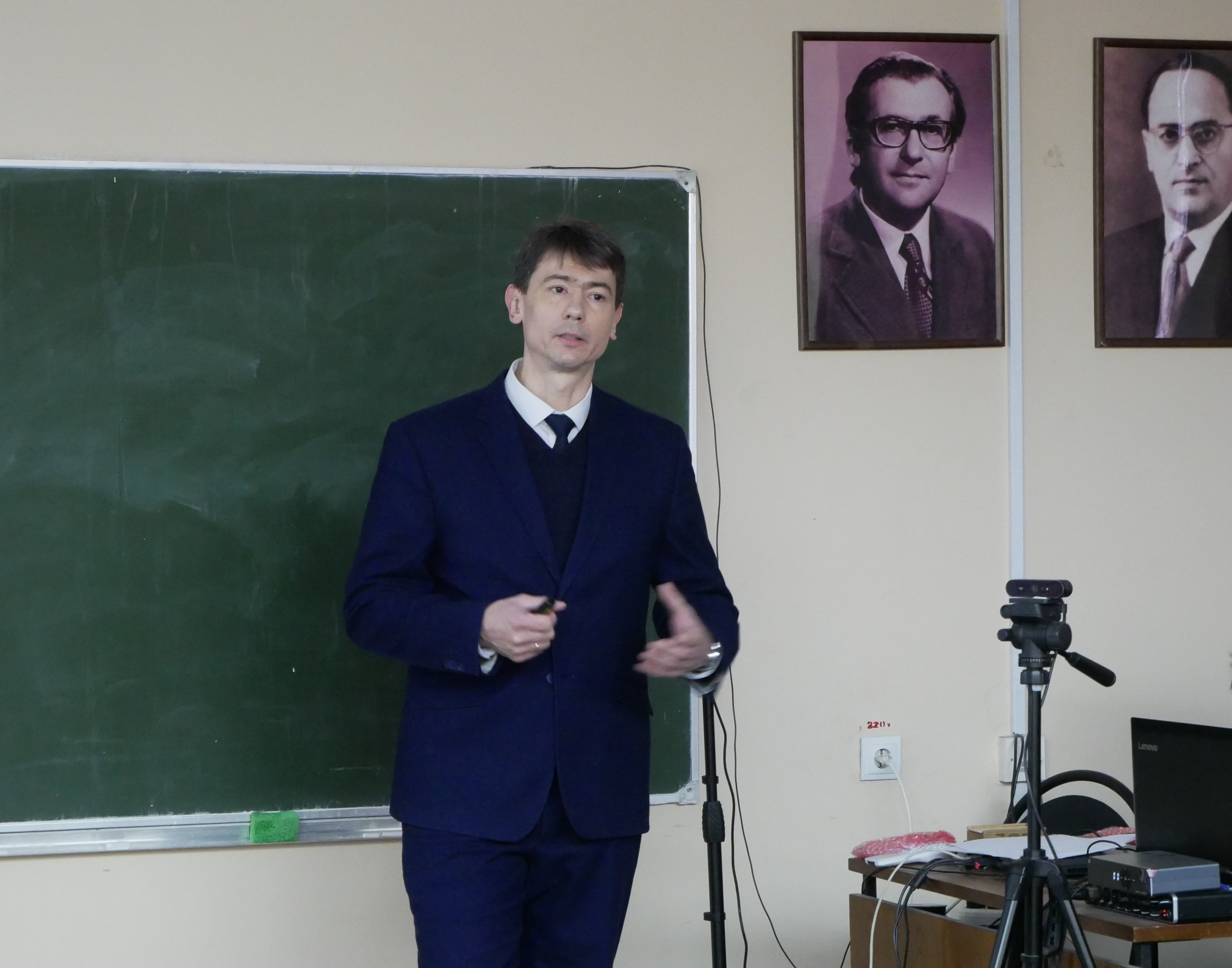
During the working part of the visit, the Director of the Institute, Serhiy Perepelytsia, presented a comprehensive report on the current state of the institution, its structure, personnel potential, and priority areas of scientific activity. It was emphasized that the Institute maintains its status as one of the leading centers of fundamental theoretical physics, combining the development of classical scientific schools with the formation of new interdisciplinary directions.
The report outlined key thematic research areas, including high-energy physics, astrophysics and cosmology, nuclear physics, quantum field theory, quantum materials and quantum technologies, condensed matter physics and nonequilibrium processes, biophysics, as well as the application of information technologies and machine learning methods in theoretical physics. It was highlighted that these areas develop in close connection with leading global scientific trends and international research programs.
Special attention was given to the structure of the Institute. The delegation was informed about the work of nine scientific departments, which include two scientific laboratories and one scientific group. It is within these subdivisions that the scientific schools founded by Mykola Bogolyubov, Oleksandr Davydov, Oleksiy Sytenko, and Petro Fomin have been preserved and actively developed; these schools formed the foundation of Ukrainian theoretical physics and ensured its international recognition.
Outlining the personnel potential, Serhiy Perepelytsia noted that today the Institute employs over one hundred scientists—both experienced researchers and young investigators. The Institute’s postgraduate students are directly involved in conducting fundamental research and participating in international scientific collaborations. It was emphasized that the combination of continuity in scientific traditions and the training of a new generation of scientists is a key condition for the sustainable development of the institution.
In his report, Serhiy Perepelytsia briefly touched upon the most significant scientific results of the Institute obtained in recent years, which have been published in leading specialized journals and have already gained international recognition.
In particular, in the Department of High Energy Density Physics, models were developed to interpret experimental results of high-energy atomic nucleus collisions, showing that the number of charged K-mesons in such collisions exceeds the number of neutral ones by almost 20%, indicating a violation of isospin symmetry. The results, published in Nature Communications, open new opportunities for a deeper understanding of the mechanisms of strong interactions at extreme energies.
A significant block of research was presented in the fields of astrophysics and elementary particle physics. Based on observations from the Hubble Space Telescope, Institute staff for the first time detected gaseous ionization emission in the spectra of compact star-forming galaxies, manifested as a spectral convexity near the Lyman continuum boundary. This discovery, published in Astronomy & Astrophysics, expands understanding of the mechanisms of universal reionization.
The report also highlighted a series of works dedicated to the search for dark matter particles. In particular, a model of Bose-condensate dark matter was proposed, within which it was shown that accounting for nonlinear self-interaction among ultralight dark matter particles allows theoretical models to be reconciled with the rotation curves of dwarf galaxies and explains differences in dark matter halo properties in various galactic systems. These results were published in the journals Physical Review D and Universe.
Special attention was paid to the work of the Laboratory of Atomic Nuclei Structure, aimed at solving the so-called cosmological lithium problem. The proposed microscopic approach to describing low-energy reactions involving beryllium and lithium isotopes allowed for the calculation of astrophysical S-factors with high accuracy and reliable extrapolation to the energies of primordial nucleosynthesis. The obtained results are in good agreement with experimental data and represent an important step in explaining discrepancies between theory and observations.
In the field of condensed matter physics and low-dimensional systems, results related to the analysis of invariants of the Dirac equation for electrons in a Coulomb potential were presented. It was shown that a new spinor invariant, combined with known integrals of motion, ensures the complete integrability of the problem and allows obtaining exact solutions for quasi-one-dimensional electrons in an atomic chain. These results have prospects for application in spintronics and the development of new functional materials.
Considerable interest was also aroused by studies of the Sagnac effect in graphene, where it was shown that the phase shift for charge carriers is determined by the free electron mass despite the zero effective mass of carriers in graphene. This result, published in Physical Review B, opens new possibilities for creating ultra-sensitive quantum sensors.
In the Department of Quantum Processes in Nanosystems, works on quantum communication using magnons—neutral spin excitations—were presented. A tunneling mechanism for magnon transfer in ferromagnetic structures was demonstrated, which is promising for creating energy-efficient elements of quantum information systems.
In the Department of Synergetics, research on nonequilibrium processes in open systems is conducted. In particular, within the developed model, the diffusion of cyanide compounds through bacterial porins and membranes was analyzed. It was shown under which conditions cyanide diffusion occurs significantly faster than biodegradation processes. The results were published in the high-impact journal Journal of Hazardous Materials.
In the Quantum Optics and Quantum Information Group, a detection scheme for pairs of microwave photons was proposed, which is an extension of the existing single-photon threshold detector—a photomultiplier based on Josephson junctions. The proposed detector can be used to improve the accuracy of reading the state of superconducting qubits in circuit quantum electrodynamics and as a "building block" for creating a microwave photodetector capable of distinguishing the number of photons.
In the Department of Theoretical and Computational Biophysics, studies of the structure and dynamics of biological macromolecules are conducted, particularly the influence of metal ions and molecular ions on the physical properties of DNA. The research carried out in the department opens possibilities for using DNA as an advanced functional material in nanoelectronics and modern power elements.
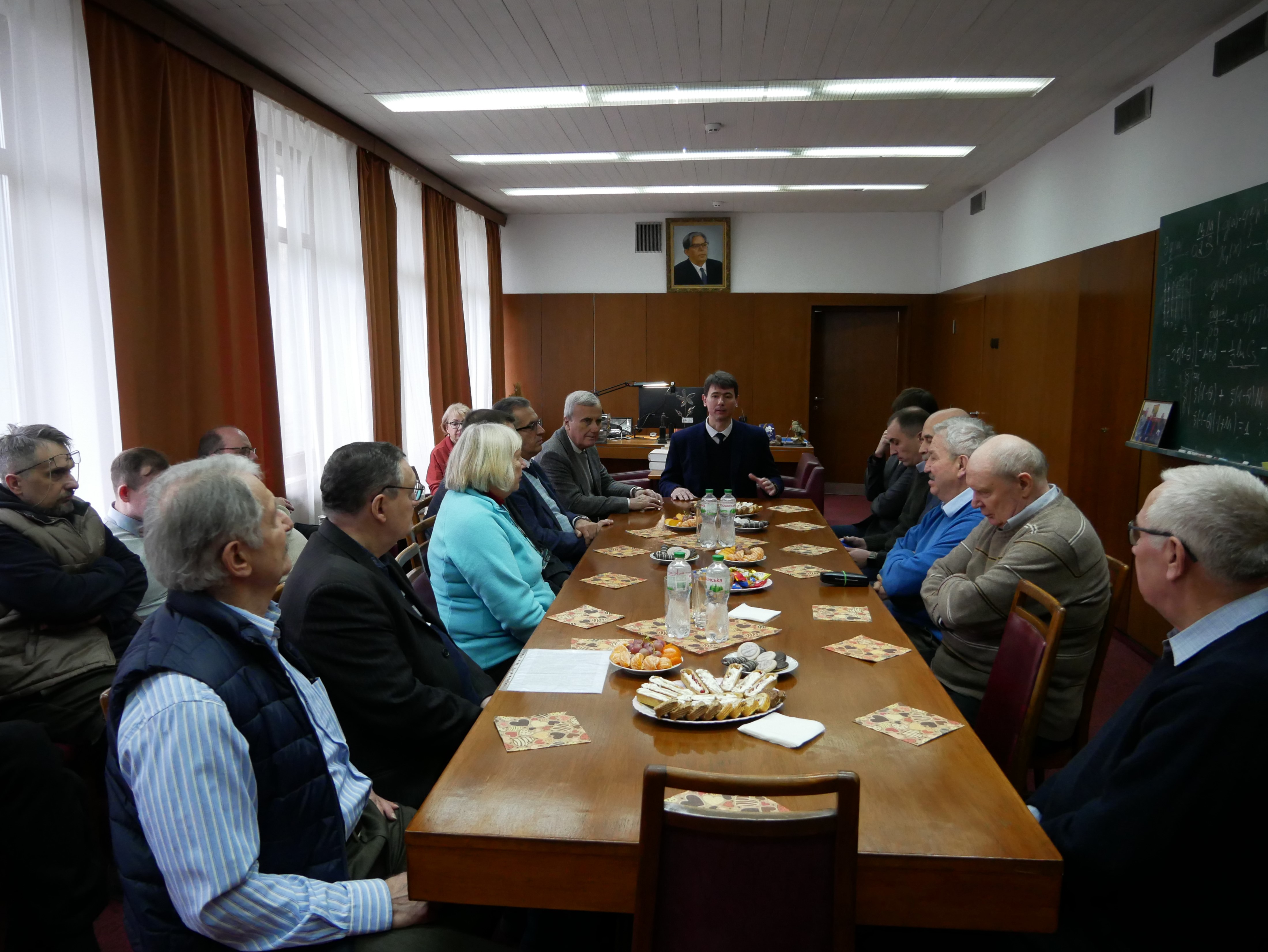
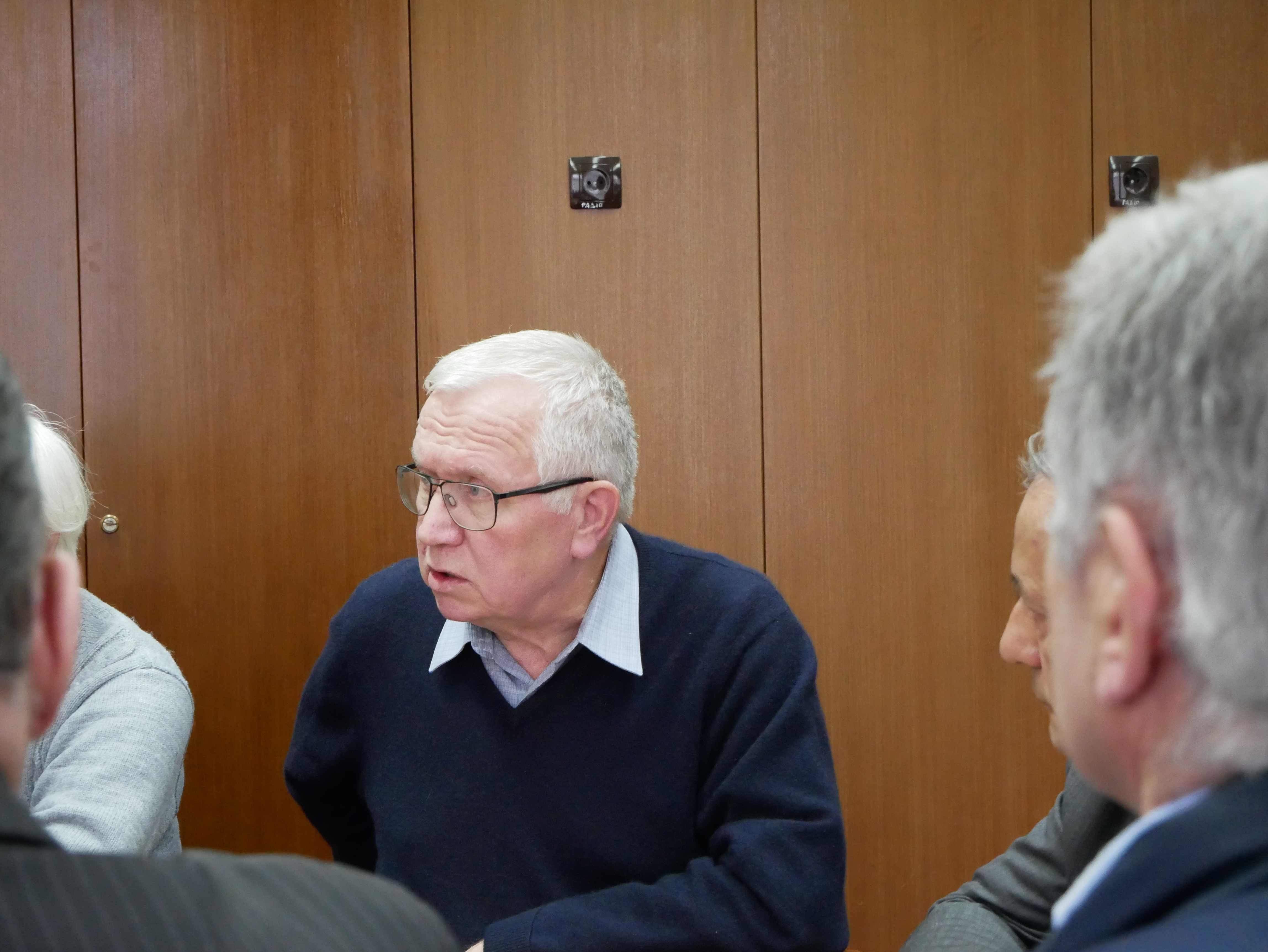
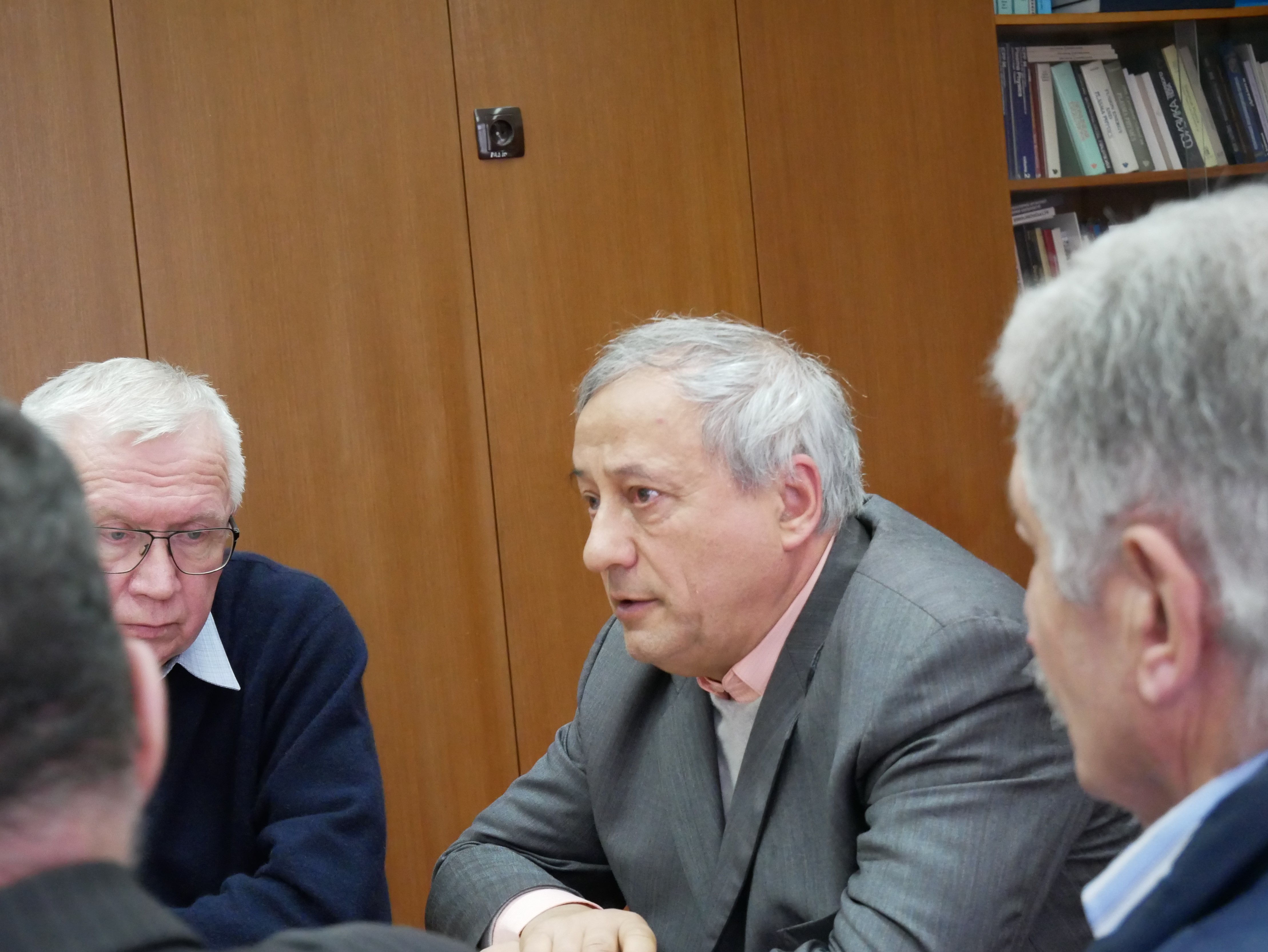
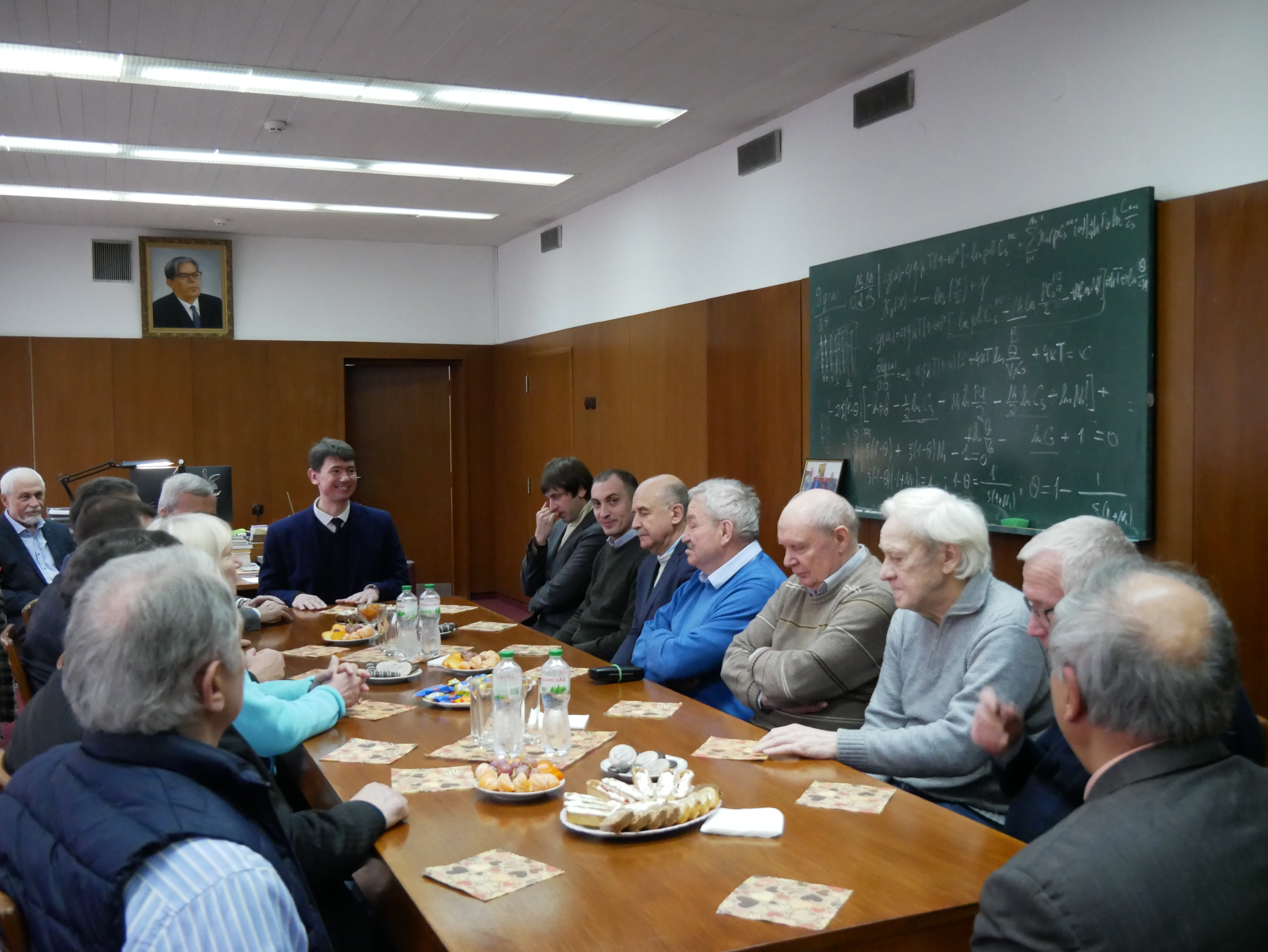
After the official report by the director, the meeting continued with direct communication between the NAS of Ukraine delegation and the Institute’s staff and heads of scientific units. The conversation took place in an open dialogue format, allowing discussion not only of work results but also everyday issues related to the functioning of the scientific institution.
The heads of the Departments of High Energy Density Physics (Prof. M. I. Horenstein), Nuclear Theory and Quantum Field Theory (B. Ye. Hrynyuk), Mathematical Methods in Theoretical Physics (Prof. O. M. Havrylyk), Theory of Quantum Processes in Nanosystems (Corresponding Member of the NAS of Ukraine Ye. H. Petrov), Theory of Nonlinear Processes in Condensed Matter (L. S. Bryzhyk), Astrophysics and Elementary Particles (Academician of the NAS of Ukraine V. P. Husynin), Synergetics (Ya. O. Zolotariuk), as well as the Quantum Optics and Quantum Information Group (Corresponding Member of the NAS of Ukraine A. O. Semenov) briefly characterized the activities of their units, their personnel composition, participation in international projects, and scientific connections with Ukrainian and foreign institutions. Academicians of the NAS of Ukraine Yu. I. Izotov and B. I. Lev also joined the discussion.
During the discussion, special attention was paid to inter-institutional and interdisciplinary interaction, participation of Institute employees in international collaborations, cooperation with CERN, grant programs, as well as their role in training scientific personnel and working with young researchers. The Chairman of the Young Scientists Council of the Institute, Candidate of Physical and Mathematical Sciences Anton Rudakovskyi, spoke about the problems faced by young employees and postgraduate students during wartime conditions.
The meeting took on a lively discursive character. Scientists raised a number of pressing issues concerning the team, including procedures for state certification of scientific institutions, criteria for evaluating fundamental research results, accounting for international activity and publication activity, as well as the impact of formal indicators on the development of theoretical directions that require long-term research.
Personnel challenges related to the renewal of scientific groups, attracting young scientists, working conditions, and opportunities for professional growth in the academic environment were also discussed. Representatives of the NAS of Ukraine leadership provided clarifications regarding the Academy’s current approaches to these issues and emphasized the importance of preserving and developing strong scientific teams.
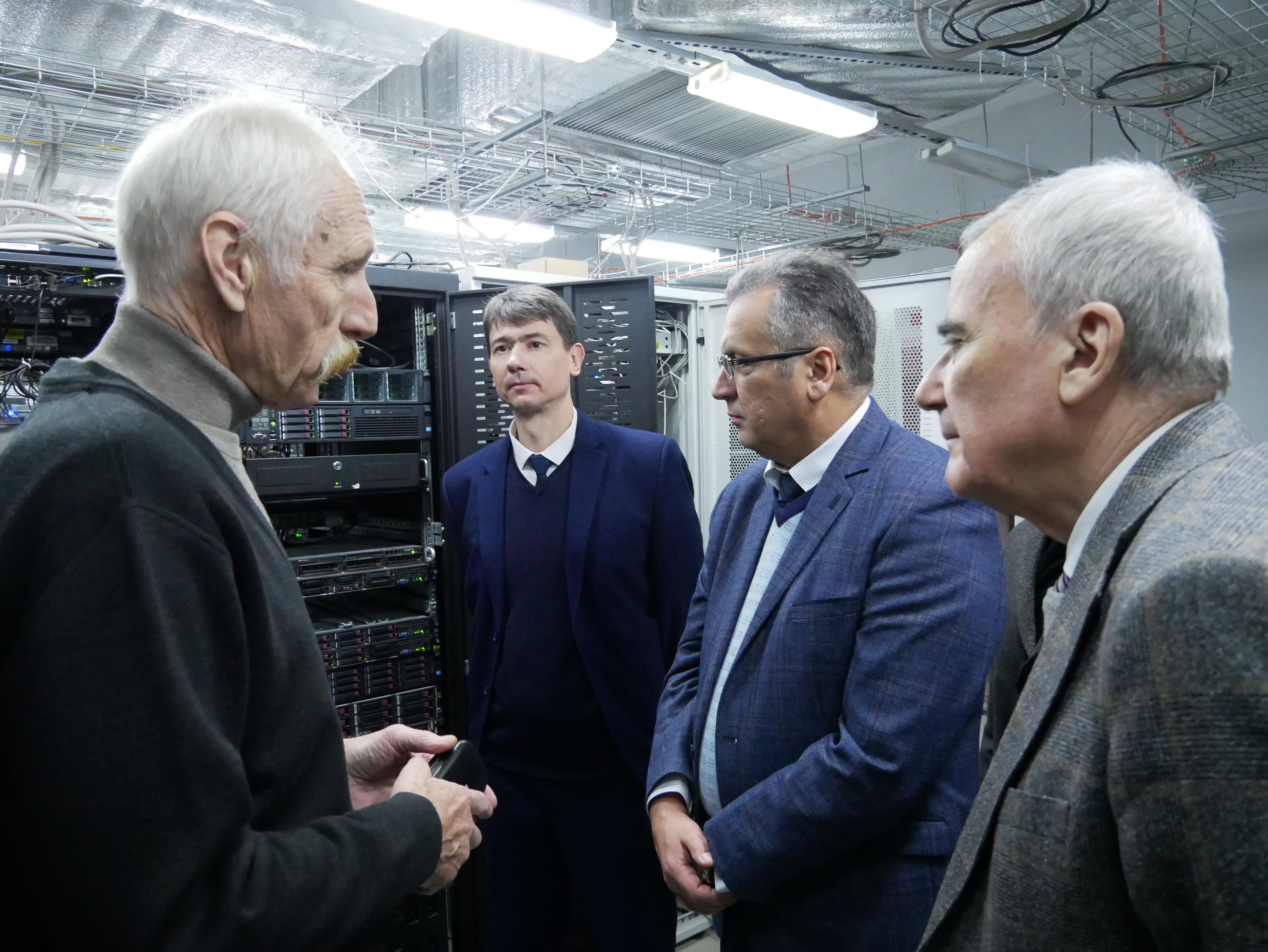
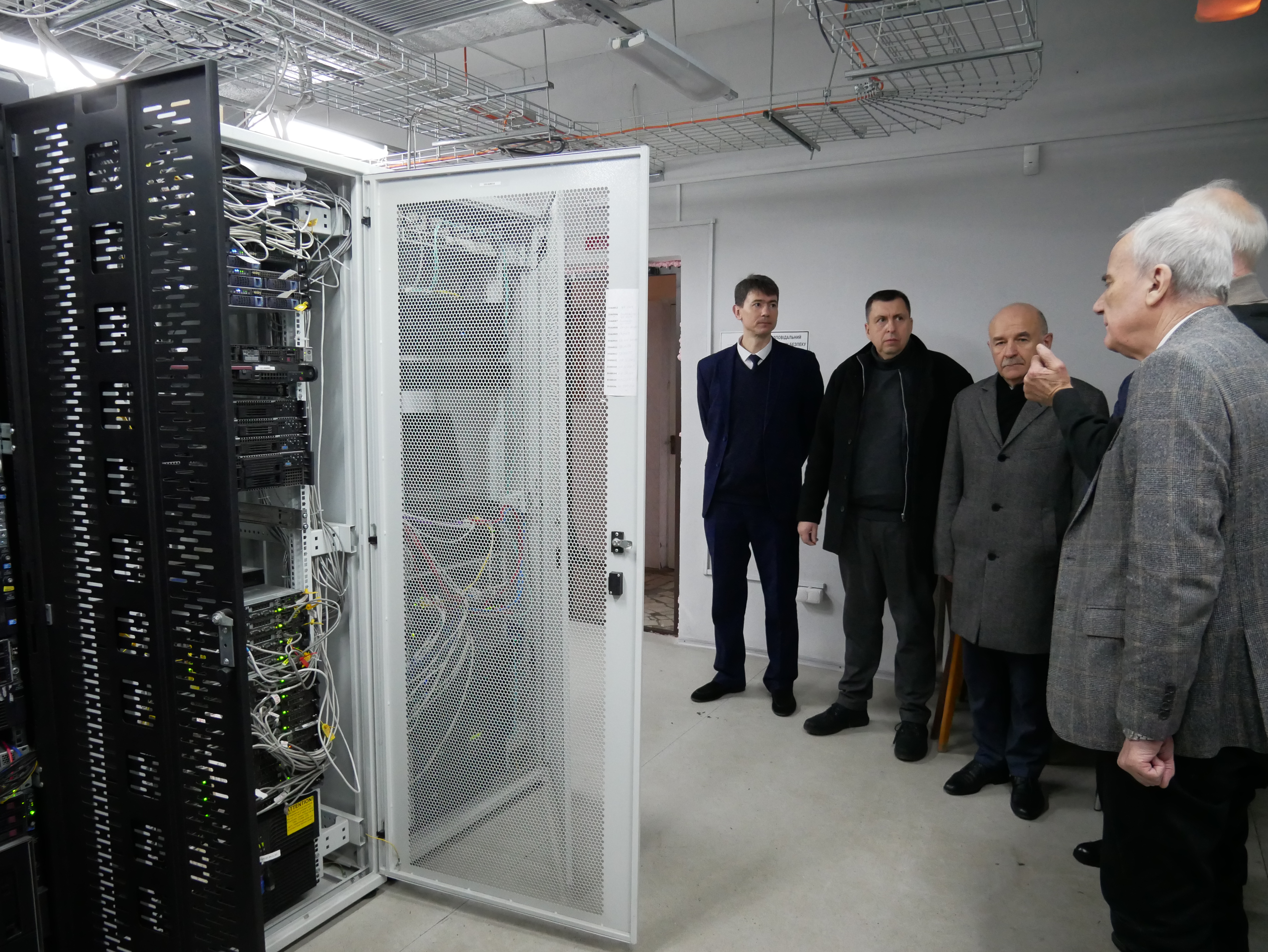
The head of the department, Candidate of Technical Sciences Serhiy Svistunov, spoke about the Shared Use Center "Resource Center for Grid and Cloud Technologies." It was emphasized that the cloud computing infrastructure created at the Institute became the first Ukrainian platform integrated into the European Open Science Cloud (EOSC). It plays a key role in conducting complex theoretical and interdisciplinary research, providing processing of large data arrays and participation of Ukrainian scientists in international projects, including cooperation with CERN and other leading scientific centers.
The educational and outreach activities of the Institute aroused significant interest among the delegation members. Since 2017, the Department of Theoretical and Mathematical Physics of the Kyiv Academic University has been operating on the basis of the Institute, preparing students at the master’s level. A new effective training system has been implemented at the department, ensuring a high level of student preparation. Graduates of the department enter the Institute’s postgraduate program and successfully defend their PhD dissertations.
The work of the Institute’s YouTube channel was also noted, which has become an open public platform for lectures, scientific seminars, and discussions involving Ukrainian and foreign scientists. This format not only expands the circle of the scientific audience but also forms public interest in fundamental research, promotes modern physics, and strengthens the authority of academic science in Ukraine.
In addition to a high level of publication activity, Institute staff also demonstrate active participation in international peer review and expert activities. In particular, a number of Institute scientists have been awarded the Outstanding Referee recognition by the American Physical Society (APS) for their significant contribution to maintaining high standards of global scientific expertise. It is also important that the M.M. Bogolyubov Institute for Theoretical Physics of the NAS of Ukraine is the base institution of the "Ukrainian Physical Journal"—a recognized international scientific publication. The work of the UPJ is important for the entire community of physicists in Ukraine.
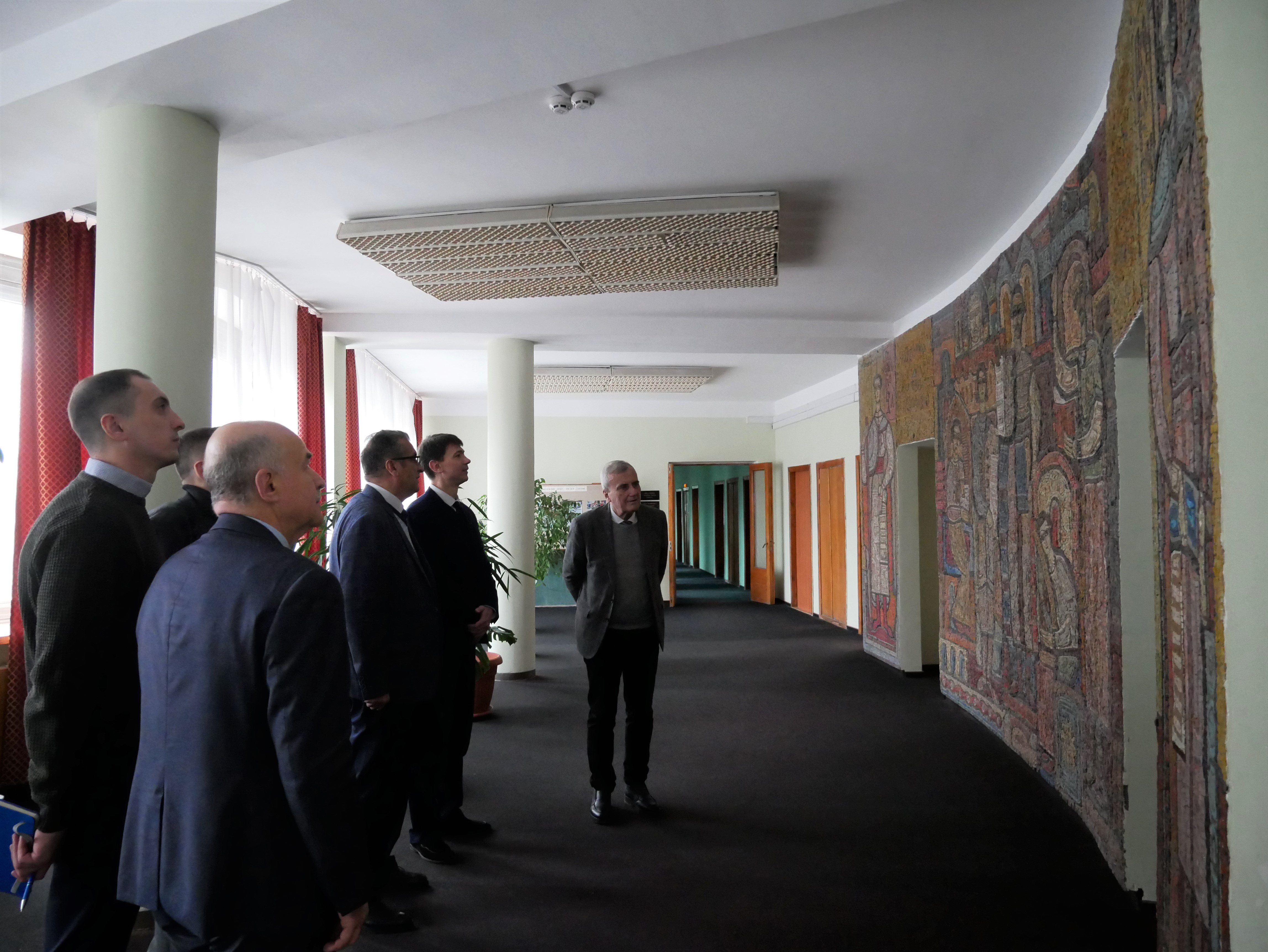
During the visit to the Institute, the delegation members’ attention was drawn to monumental panels in the Institute’s premises, created by prominent Ukrainian artists Ivan Marchuk and Mykola Storozhenko. Academician Anatoliy Zahorodnii emphasized that these works have long become an integral part of the institution’s image, symbolically reflecting its spirit and philosophy. The combination of artistic expression with the intellectual restraint of the scientific environment underscores the continuity of the Institute’s traditions, its openness to new ideas, and the organic connection between scientific rigor and creative thinking.
Summing up the visit, the leadership of the National Academy of Sciences of Ukraine noted that the M.M. Bogolyubov Institute for Theoretical Physics of the NAS of Ukraine maintains its role as one of the key intellectual centers of the state. Despite the complex challenges of the present, the Institute demonstrates a high level of scientific results, strong human potential, developed computational infrastructure, and openness to society, remaining a space where ideas that shape the future of fundamental science are born.