

How has the great war against Russia changed and continues to change Ukrainians? Do we have enough resilience, including psychological? How to motivate people to take up arms to defend Ukraine? How to encourage the return of Ukrainian citizens who are abroad? About all this and much more, the director of the Institute of Sociology of the NAS of Ukraine, corresponding member of the NAS of Ukraine Yevhen Holovakha spoke at the end of 2024 – beginning of 2025 in an interview with the online publication "Ukrainska Pravda", the Ukrainian edition of Radio Liberty and the radio station "Hromadske Radio".
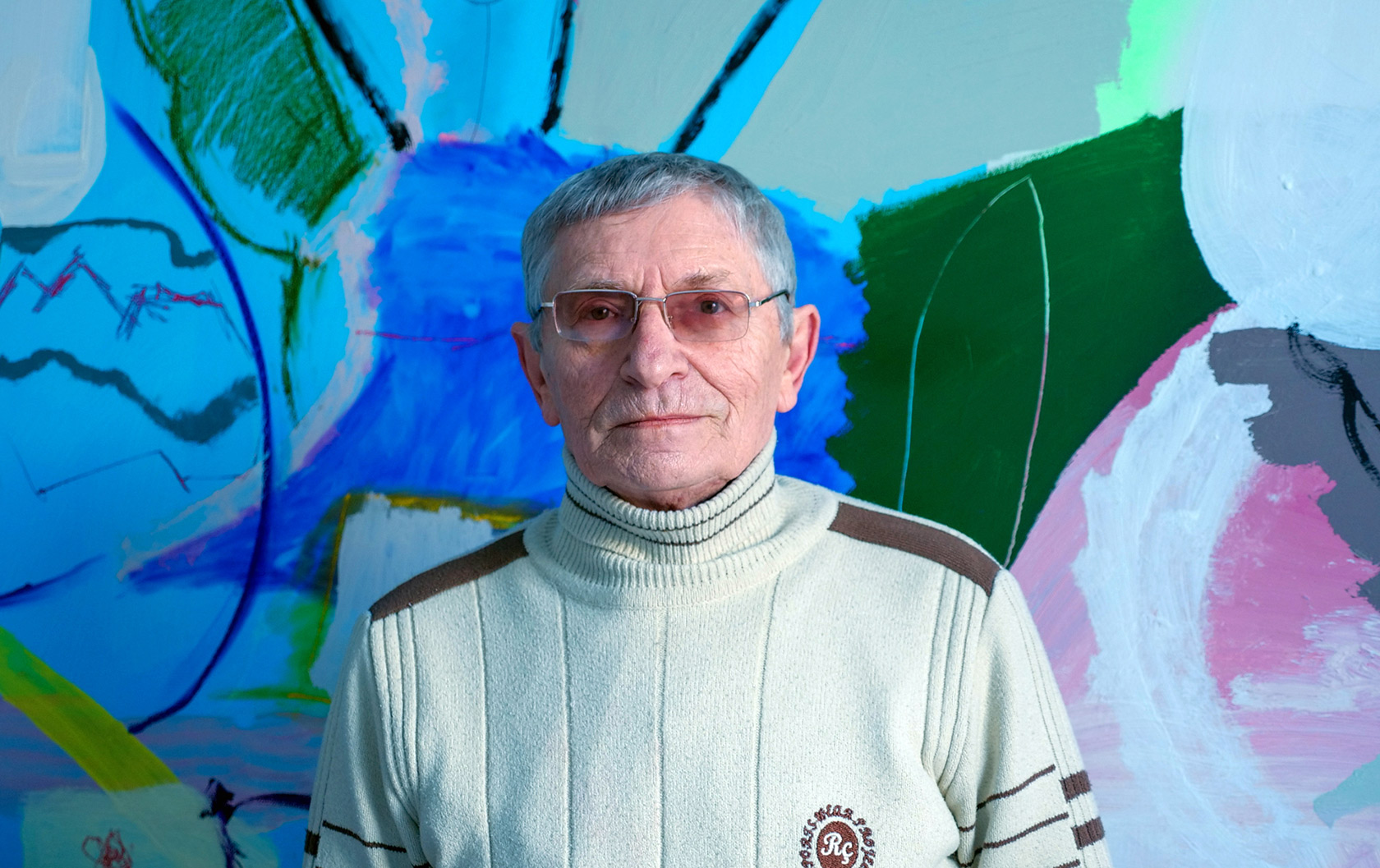
Corresponding member of the NAS of Ukraine Yevhen Holovakha. Photo by Yevhen Rudenko, source – online publication "Ukrainska Pravda"
On the stress resilience of Ukrainians:
“At the end of 2022, only 12% of Ukrainians who were in the territory controlled by Ukraine during the survey had a high level of distress. Distress is a state of prolonged stress that affects people's mental and physical health and can potentially impact their ability to work.
In the October 2024 study, a high level of distress was observed in 27.1% of Ukrainians. And in 2025, this percentage may be even higher. <…> Although, in my opinion, our resilience will be sufficient for 2025. I believe it will also be enough for 2026, when Russia will start to crumble because it will not be able to supply itself with enough weapons and people. <…>
By the way, do you know what the most powerful stress-inducing factor is, according to our research? It is the experiences from what people saw in the media. But this factor has always been in first place; it does not change.”
“So the media bear great responsibility. More than 80% say that this is what can cause stress. Yes, stress exists, anxiety has increased, it has become harder psychologically, but the main thing is: this is not a determining indicator of moral-psychological and social resilience. In second place is fear for the life and health of loved ones, and this factor has not changed compared to 2023. That is, the vast majority [two-thirds] of Ukrainians, despite all the hardships of war, are ready to endure in order to win this war. <…> …Ukrainians demonstrate a high level of ability to resist even psychological stressors. Considering that many people are in a state of distress, ...still the vast majority are ready to resist in order to preserve the country's independence. And in order for Ukraine to end the war on just terms.”
“…I would not predict despair for 2025.”
“How confident are you in Ukraine’s victory in the war with Russia? This question is in our study. In December 2022, three quarters of respondents were fully confident, together with those rather confident – 96%, and only one percent were not confident at all.
In November 2024, 39% were fully confident, 28% rather confident. This does not mean that most people do not believe in victory. But they have some doubts and hesitations.
I see nothing dramatic in this. These data correlate quite clearly with what we have regarding the psychological state of people, their ideas about the future. <…> [At the same time] now more than three quarters of respondents see the situation as hopeful for Ukraine.”
On the difficulties of mobilization and ways to overcome them:
“For a wave of civic consciousness related to the war to appear, the shock situation we found ourselves in at the beginning of the full-scale invasion is needed. Now, unfortunately, the process of routinization of the war in consciousness has occurred. Many think that the war is going on by itself.
For most people to understand that nothing happens by itself, we need to find ways to influence the consciousness of ordinary people. It is necessary to explain that Ukraine is in a state of existential threats. If we do not defend it, it will disappear. And Russia will agree to the existence of specific people only if they renounce their identity.
Currently, 80% of Ukraine’s residents primarily consider themselves citizens of their state. If there is no Ukraine, who will they consider themselves?”
“There is indeed a strange situation where sometimes a very large part of the population simply does not understand how terrible it is. But how can they understand if somewhere there is a terrible war, a complete horror, and somewhere people live almost unchanged. <…>
95% say that a free, independent Ukraine is a great value for them. And for everyone. So how can they not defend it if it is a great value? <…>
First, [Ukrainian citizens need] to be explained [that this is an absolutely real situation, that we can lose the country and become slaves in a very terrible system]. Second, create a system of mobilizing people. If this is a war for the survival of the country. <…> This is a terrible situation, but in this terrible situation, probably, a choice will have to be made.”
“The vast majority of Ukrainians believe in fate.
Ukrainians tend to externality – there is such a psychological term. Externality is when you believe that in your life everything is decided mainly not by you, but by external circumstances. Internality is when you recognize the influence of external circumstances on your life, but you take responsibility for the events in your life.
In Ukraine, there are more externals than internals.
When we ask people about patriotism, the overwhelming majority are patriots. But despite this, many people believe that everything will resolve itself. They are more ready to wait for this to happen than to risk their lives. Perhaps that is why Ukrainians cannot achieve many successes in state-building.”
On the prospects of the return of Ukrainian refugees:
“It is difficult to predict how many people from the millions who found themselves abroad after February 24, 2022, will return to Ukraine. Even if today they declare such intentions, it does not mean they will actually return.
Obviously, with each year of the war, we lose this potential. Because every year more and more displaced persons adapt abroad. Those who get jobs, settle their children, most likely will not return.
I always refer to the experience of the Balkan wars. There too were many who fled the war. In the end, 30% of them returned.
Therefore, I believe that if the current hot phase of the war lasts up to five years, it is possible to count on 30 to 50% of the total number of those who left since 2022 returning to the country. And exactly how many will depend on what return program we create, what attitude toward these people will dominate in society at that time. <…>
We really need not formal unity, but meaningful consolidation. Because formal unity is sufficient only in a totalitarian country. There you can order people to be united and they will be united. And where will they go: if you are not united – you will be in prison.
But we need to find meaningful ways to consolidate people in order to return those who left in a legal way.”