Established in 2001; scholars of the Department of Physics and Astronomy of the NAS of Ukraine are awarded the Prize for outstanding scientific papers in the field of experimental physics



Lev Vasyliovych Shubnykov Prize
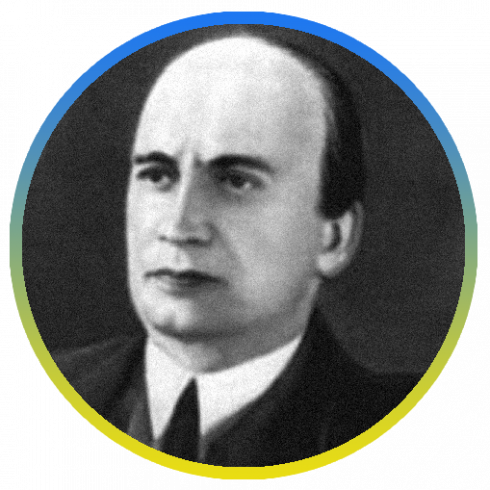
Lev Vasyliovych Shubnykov, an outstanding experimental physicist of the 20th century and founder of the universally recognized school of cryogenic physicists, was born on September 29, 1901 in St. Petersburg in the family of an accountant. After graduating from the Moscow Commercial School in the autumn of 1918, he entered Petrograd University, while simultaneously working as a laboratory assistant at the Physico-Technical Institute.
In 1926, after graduating from the university, on the recommendation of A.F. Joffe, the talented graduate was sent to Holland to the low-temperature laboratory in Leiden (one of the largest European centers of physics, which had an excellent experimental base and long-standing scientific traditions). L.V. Shubnykov and the head of the laboratory, Professor Wander de Haas, became co-authors of the discovery – oscillations of the resistance of metals in a magnetic field, which was called the Shubnykov-de Haas effect.
Upon the return to his homeland, L.V. Shubnykov did not stay in Leningrad, but accepted the invitation of the director of the Ukrainian Physics and Technology Institute (UPhTI, Kharkiv) I.V. Obreimov and headed the cryogenic laboratory – the unique in the USSR at that time. He conducted research in two focus areas: physics of condensed matter at low temperatures (superconductivity, helium, low-temperature magnetism, solidified gases (cryocrystals), phase transitions) and technical physics (cryogenic liquids and their mixtures, methods of their separation, applications).
Research in the field of technical physics became so important that, at the initiative of L.V. Shubnykov, in 1935, a deep cooling experimental station was founded in Kharkiv, which became a unique scientific and technological enterprise of a new type.
Despite political pressure and demands to engage only in applied research, L.V. Shubnykov and his colleagues obtained significant fundamental results. These were the properties of superconducting alloys whose behavior differed from that of pure superconductors, and the magnetism of liquid hydrogen and helium. In the night of August 6, 1937, on the day of his arrival from vacation in Crimea, Lev Shubnykov was arrested. After the arrest, L.V. Shubnykov was deprived of the right to any publications. From that time on, all papers he was the author of, were published without his name (it was not mentioned at scientific conferences either).
The name of L.V. Shubnykov was forgotten for many years. This outstanding scientist has not yet been properly appreciated by the history of science. According to experts in the field of experimental physics, L.V. Shubnykov and his colleagues obtained several results that could qualify for the Nobel Prize. His pioneering scientific works laid the foundation and determined the development paths of the most important areas of modern solid-state physics, low-temperature physics and engineering for many years to come.
Only in the late 1960s did the first publication about L.V. Shubnykov’s contribution to science appear.
Lev Vasyliovych Shubnykov was shot on November 10, 1937. The place of his death and the burial place has not yet been established.